Modern homes, workplaces, workshops, and outdoor spaces depend on electrical devices every day. From smartphones and laptops to power tools, appliances, lighting systems, and entertainment equipment, convenient access to electricity has become essential. However, having access to power is only part of the equation. Choosing reliable power accessories is equally important for safe charging, equipment protection, and everyday convenience.
Power accessories include extension cords, power strips, adapters, surge protectors, USB charging solutions, and other products designed to distribute or extend electrical power. Selecting the right product requires more than choosing the longest cord or the largest number of outlets. Factors such as electrical capacity, construction quality, environmental conditions, safety features, and intended use should all be considered.
Understanding the Role of Power Accessories
Power accessories make electrical connections more flexible. A wall outlet may not always be positioned close enough to a desk, workbench, outdoor activity, or appliance. Extension cords provide additional reach, while power strips allow several devices to share one electrical source.
Protection-focused accessories can also help reduce electrical risks. Surge protectors, for example, are designed to help protect connected electronics from certain voltage surges. Meanwhile, properly rated cords can provide dependable power without being pushed beyond their intended capacity.
The key is matching the accessory to the application. A lightweight cord designed for small household electronics should not automatically be used with high-powered equipment. Similarly, an indoor accessory may not be suitable for outdoor environments.
Why a Weatherproof Extension Cord Can Be Essential
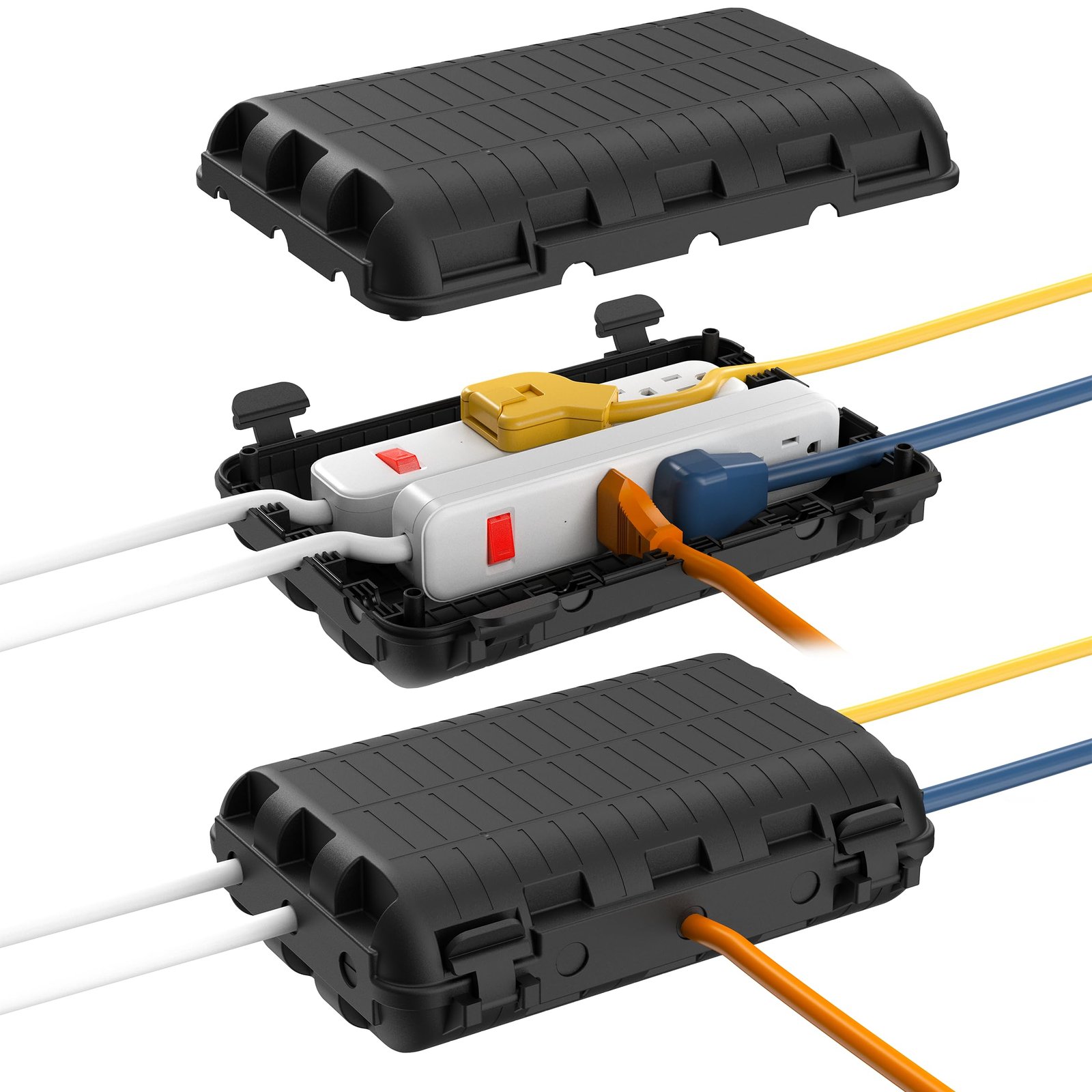
Outdoor electrical applications require additional consideration because moisture, temperature changes, sunlight, dirt, and physical wear can affect electrical accessories. A Weatherproof Extension Cord is designed for applications where greater environmental resistance is needed, depending on its specific construction and rating.
For example, homeowners may need extended power for outdoor lighting, garden equipment, temporary work areas, or seasonal decorations. A suitable Weatherproof Extension Cord can provide greater flexibility while being designed for conditions that ordinary indoor cords may not tolerate as well.
However, weather-resistant construction does not mean a cord can be used carelessly in every outdoor situation. Users should always check the product’s intended environment, ratings, connectors, and safety instructions. Connections should also be positioned appropriately to reduce exposure to standing water and other hazards.
Check Electrical Ratings Before Buying
One of the most important factors when selecting a power accessory is its electrical rating. Every cord and power distribution product has limits concerning voltage, current, and power. Exceeding those limits can cause overheating and create serious safety hazards.
Before purchasing an extension cord, identify the equipment that will be connected to it. Small electronics generally have different power requirements from heaters, compressors, saws, lawn equipment, or other high-demand devices.
The length of an extension cord can also influence performance. Longer cords can experience greater voltage drop, particularly when supplying substantial loads. Choosing an appropriately sized and rated cord helps ensure that the product is suitable for the intended application.
Consider Construction and Durability
A reliable power accessory should be built for its intended environment. Construction quality can influence how well a cord or power strip handles repeated use, movement, storage, and exposure to environmental conditions.
Look at details such as insulation, connector construction, flexibility, strain relief, and overall build quality. For products intended for workshops or outdoor applications, durability becomes especially important because the accessory may encounter abrasion, dirt, temperature changes, or frequent handling.
A durable product may also provide better long-term value. Choosing solely on the lowest purchase price can result in frequent replacements if the accessory is not designed for the conditions in which it will be used.
Select the Right Power Strip for Multiple Devices
Power strips are useful when several devices need to operate near the same location. A desk, entertainment center, workstation, or charging station may benefit from multiple outlets in one convenient location.
However, the number of outlets should not be the only consideration. Users should examine the strip’s total electrical capacity and avoid connecting equipment that collectively exceeds its rating.
For sensitive electronics, additional protection features may also be useful. Some power strips include surge protection, indicator lights, safety shutters, circuit breakers, or other design features. Selecting the right combination depends on the equipment and environment.
Think About Charging Convenience
Charging has become one of the most common power-related tasks. Phones, tablets, laptops, wireless accessories, cameras, and other devices often need regular charging throughout the day.
Modern charging accessories can reduce clutter by combining multiple charging ports with traditional electrical outlets. USB-A and USB-C connections may provide convenient options for compatible devices, while higher-power USB-C charging can support certain laptops and other demanding electronics.
When choosing a charging accessory, verify that its output specifications match the requirements of the devices being charged. Compatibility matters because not every charging port provides the same power level or charging capabilities.
Safety Features Should Be a Priority
Convenience should never come at the expense of electrical safety. Reliable power accessories may include features such as overload protection, circuit breakers, grounded connections, insulated components, and surge protection.
Users should also inspect accessories regularly. Frayed insulation, damaged plugs, loose connections, exposed wiring, scorch marks, or unusual heat can indicate that a product should no longer be used.
Extension cords should not be permanently substituted for fixed electrical wiring where permanent wiring is required. They should also be used according to the manufacturer’s instructions and appropriate electrical safety practices.
Match the Accessory to the Environment
The environment in which an accessory will be used is just as important as its electrical specifications. Indoor office use, garage work, construction areas, gardens, workshops, and temporary outdoor events can all create different requirements.
An indoor charging station may prioritize compact design and multiple USB ports. A workshop may require a heavy-duty cord with greater mechanical durability. Outdoor applications may require products specifically designed and rated for outdoor use, including a suitable Weatherproof Extension Cord when appropriate.
Temperature, moisture, physical traffic, and exposure to sunlight should all be considered before selecting a product.
Avoid Common Power Accessory Mistakes
Several simple mistakes can reduce the safety and usefulness of power accessories. One common error is using an accessory beyond its electrical rating. Another is connecting multiple power strips together without considering the resulting load.
Leaving cords under rugs, placing them where they can be crushed, or allowing them to become trip hazards can also create problems. Outdoor cords should not be treated as permanently waterproof unless the product is specifically designed and rated for that purpose.
Proper storage is important as well. Cords should be stored without excessive kinking or damage, and connectors should be kept clean and protected when not in use.
Make Reliability Part of the Buying Decision
Choosing reliable power accessories is an investment in convenience, equipment protection, and safer electrical use. The best product is not necessarily the one with the most outlets, the longest cable, or the lowest price. Instead, it is the product that properly matches the electrical load, environment, durability requirements, and intended application.
For indoor electronics, convenient charging and appropriate protection may be the main priorities. For demanding equipment, electrical capacity and heavy-duty construction become more important. For outdoor applications, environmental resistance and appropriate ratings deserve special attention.
A Weatherproof Extension Cord can be particularly useful when power needs to reach outdoor areas, but it should still be selected according to the equipment requirements and manufacturer’s specifications.
Ultimately, careful selection makes everyday electricity more manageable. By checking ratings, choosing suitable construction, considering environmental conditions, and prioritizing safety features, users can build a dependable power setup that supports charging, protection, and convenience without unnecessary risks.