You’re doing everything right. You’re showing up to workouts that aren’t comfortable. You’re pushing through the cardio. And the inner thigh chafing is making each session harder than the fitness level alone accounts for.
Chafing during a weight loss phase is not a body problem. It’s a gear problem. The fabric between your thighs is either making exercise possible or harder than it needs to be.
Why Chafing Is More Severe During Weight Loss
Body composition during active weight loss creates specific friction patterns. Areas of skin-on-skin contact — inner thighs primarily — experience higher friction loads than the same anatomy at different body compositions because the contact surface is larger and softer. This is the mechanical reality, and it’s worth naming directly: it’s a physics and fabric problem, not a failure.
The standard recommendation for chafing — anti-chafe balm — addresses the friction in the moment. What it doesn’t address is the fabric environment that compounds the problem. Synthetic underwear in the inner thigh zone creates two problems: the hydrophobic surface develops salt crystal deposits as sweat dries, creating an abrasive micro-texture that worsens over the duration of a workout; and the thermal accumulation of synthetic fabric against skin-on-skin contact zones raises local temperature, increasing the inflammation response that chafing creates.
A man who’s building a cardio habit that will carry him through a weight loss phase can’t afford to have workouts ended by friction injuries. The gear that makes exercise physically possible is health gear.
Chafing that stops workouts is the biggest invisible barrier to exercise consistency during weight loss. Fixing it is a health intervention, not a comfort upgrade.
What to Look For in Anti-Chafe Underwear During Weight Loss
Natural Fiber Softness at Skin-on-Skin Contact Zones
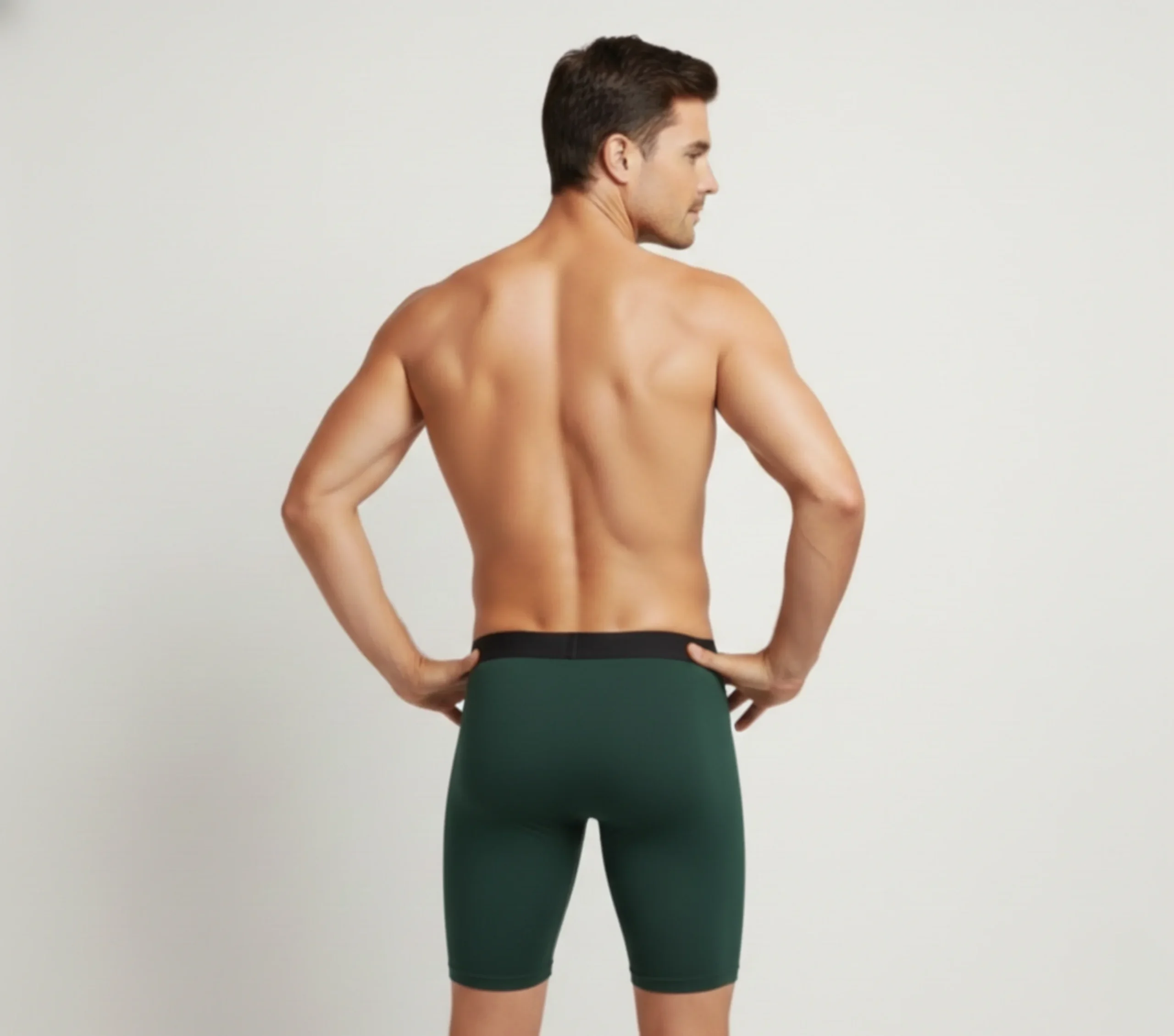
The inner thigh contact zone benefits specifically from fabric softness at sustained skin-on-skin friction. Organic cotton fiber surface is inherently softer than synthetic alternatives and becomes softer under moisture rather than more abrasive. The wet-softening property of natural fiber is most relevant exactly where chafing is most likely: in the warm, moist environment of the inner thigh during extended cardio. Mens organic boxers with soft flatlock inner thigh construction address the highest-friction zone directly.
Longer Leg Length for Coverage
Boxer briefs with longer leg coverage reduce the area of skin-on-skin contact at the inner thigh. A boxer brief that covers to mid-thigh creates a fabric barrier between inner thigh skin surfaces at the contact zone where chafing initiates. This is the most direct structural intervention: fewer inches of exposed inner thigh means a smaller friction zone.
Breathability for Extended Cardio Duration
Weight loss cardio sessions are typically longer-duration moderate-intensity efforts — 45 minutes to 90 minutes. The thermal accumulation from synthetic fabric compounds the inflammatory response from chafing. Organic cotton’s breathability reduces the heat in the contact zone that makes chafing not just uncomfortable but tissue-damaging over extended sessions.
Flatlock Seam Construction
The inner thigh seam is the critical construction point for anti-chafe underwear in any context. During weight loss cardio, where contact duration and friction intensity are both elevated, flatlock seams that lie parallel to skin rather than raised seams that create a ridge are non-negotiable.
Durability for High-Frequency Training
A weight loss phase typically involves five to six workout sessions per week. The underwear goes through more wash cycles per week than it would in casual use. High-quality organic cotton construction that maintains integrity over 250+ wash cycles per year is the durability requirement for this use intensity.
Practical Guidance for Men in Active Weight Loss
Solve the gear problem before the fitness problem reaches you. If you know chafing has stopped previous exercise attempts, address the gear before you start building the habit this time. Walking into the first week with the right fabric removes the friction variable that ends training weeks before fitness limits would.
Combine fabric choice with protective habits. Natural balm applied to the inner thigh before high-friction workouts works as a backup to good fabric choice, not a replacement for it. Think of balm as insurance and fabric as the primary intervention.
Size correctly for your current body. Underwear that fits correctly at your current weight provides better coverage and less friction than undersized underwear that was purchased for a previous or target weight. Size for where you are now.
Track chafing incidents as training data. If a specific workout duration or activity type consistently produces chafing, that’s information. Adjusting fabric choice, coverage length, or balm application based on training type is legitimate training management.
Replace worn underwear more frequently. High-frequency washing during a weight loss phase means faster wear. Underwear that’s thinned or has lost seam integrity chafes more than new underwear. Replace before failure, not after it.
Why This Gear Variable Is Worth Addressing Directly
The research on exercise adherence during weight loss consistently identifies practical barriers as the most common reason for dropout — not motivation, not goals, not knowledge. A painful barrier that ends a workout early or makes the next one harder to start is a practical barrier, exactly the type that predicts dropout.
Anti-chafe gear that makes exercise physically bearable is a health intervention with a return on investment that scales with how consistently the exercise habit is maintained. The cost is a pair of organic cotton underwear. The benefit is the difference between an exercise habit that survives the first month and one that doesn’t.
The gear that gets overlooked in weight loss conversations is the gear that makes the next workout possible. That deserves to be on the list.