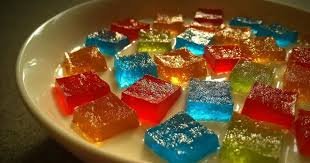
Texture is often the invisible bridge between a good dish and an unforgettable culinary experience. In the world of pastry, molecular gastronomy, and even savory sauces, achieving that perfect “mouthfeel”—the delicate balance between firm structure and a melting sensation—is a science of its own. Central to this pursuit is a technique often whispered about in professional kitchens: the gelatin trick.
While gelatin has been used for centuries, understanding the molecular dance behind it allows you to manipulate textures with surgical precision. This article dives deep into the physics and chemistry of gelatin to explain how you can master this trick for the best results in your kitchen.
The Molecular Anatomy of Gelatin
To understand why the gelatin trick works, we must first look at what gelatin actually is. Gelatin is a protein derived from collagen, the primary structural protein found in animal connective tissues. When collagen is heated in water, its triple-helix structure begins to unravel, a process known as denaturation.
Once these proteins are cooled, they attempt to reform their original bonds. However, they can’t quite get back to their original tight spirals. Instead, they form a three-dimensional network that traps liquid within its gaps. This is the transition from a “sol” (a liquid with dispersed polymers) to a “gel.”
The Power of the Bloom
The first step in any successful gelatin trick is the “bloom.” This refers to the process of hydrating the gelatin granules or sheets in cold liquid before adding them to a hot mixture.
- Why Cold Water? If you toss gelatin directly into hot liquid, the outer layer hydrates instantly and forms a waterproof barrier, leaving dry, clumpy pockets inside.
- The Science: Cold water allows the protein granules to swell and absorb liquid evenly. This ensures that when heat is finally applied, the gelatin dissolves uniformly, creating a smooth, consistent matrix rather than a grainy mess.
Temperature: The Secret Variable
The most critical component of the gelatin trick is temperature management. Gelatin is thermo-reversible, meaning it melts when heated and sets when cooled.
- Melting Point: Most gelatin gels will melt at approximately 35°C (95°F). This is slightly below human body temperature, which is why gelatin-based desserts have that “melt-in-your-mouth” quality.
- Setting Point: Gelatin begins to set as it drops below 15°C (59°F).
The trick to the best texture lies in how fast you cool it. A “flash-chilled” gel (using an ice bath) creates a different crystalline structure than one cooled slowly at room temperature. Slow cooling allows for a more organized protein network, often resulting in a clearer, more elastic texture.
Manipulating the Gelatin Trick for Different Textures
Not all gels are created equal. Depending on your goal, you can use the gelatin trick to achieve a variety of results:
The Delicate Mousse
For a mousse, you want just enough gelatin to hold the air bubbles in place without making the dessert feel rubbery. The trick here is “tempering.” You fold a small amount of your aerated base into the melted gelatin before folding that mixture back into the main batch. This prevents the gelatin from seizing into “strings” when it hits the cold cream.
The Crystal-Clear Aspic or Jelly
Clarity is the hallmark of a high-quality jelly. The gelatin trick for clarity involves avoiding vigorous whisking, which introduces air bubbles. Instead, use a gentle folding motion and ensure the gelatin is fully dissolved and strained through a fine-mesh sieve.
The Rich, Silky Sauce
In savory cooking, the gelatin trick is used to mimic the body of a long-simmered stock. If you are making a quick pan sauce, whisking in a small amount of bloomed gelatin can provide the “lip-smacking” viscosity usually reserved for demi-glace that has cooked for 24 hours.
Factors That Can Break Your Gel
Physics isn’t the only player; chemistry can be a “gel-killer.” If you’re attempting the gelatin trick with certain ingredients, you might find your mixture refuses to set.
- Enzymes (The Fruit Problem): Fresh pineapple, kiwi, papaya, and ginger contain proteolytic enzymes (like bromelain in pineapple). These enzymes act like tiny scissors, cutting the protein chains of the gelatin before they can form a network. To fix this, you must heat the fruit to 80°C (176°C) to deactivate the enzymes before adding the gelatin.
- Acidity: High acid levels (pH below 4) can weaken the gelatin network. If you are making a lemon or lime jelly, you may need to increase the gelatin ratio by 10-20% to compensate for the acid’s interference.
- Sugar and Alcohol: Sugar actually strengthens a gel by competing for water, which concentrates the protein network. Alcohol, in moderation, can also firm up a gel, but at high concentrations (above 40%), it can cause the proteins to precipitate out, ruining the texture.
[Image showing a comparison of gelatin sets with different pH levels and enzyme presence]
Bloom Strength: Choosing Your Tool
Gelatin is graded by “Bloom strength,” a measurement of the stiffness of the gel. Most commercial powders are around 225 Bloom, while sheet gelatin comes in Bronze (125-150), Silver (160), and Gold (200).
The gelatin trick is easiest to control with Silver or Gold sheets because they provide a much cleaner flavor and higher clarity than powders. When using sheets, the “trick” is to soak them in an excess of water; they will only absorb exactly what they need, making the process almost foolproof.
Advanced Applications: The Fluid Gel
One of the most modern versions of the gelatin trick is the “fluid gel.” This involves letting a gelatin-based liquid set completely into a firm block, then shearing it in a high-speed blender. The result is a substance that acts like a liquid when under pressure (squeezed out of a bottle) but holds its shape like a solid once it hits the plate. This is how high-end chefs create those perfect, tiny dots of sauce that don’t run across the plate.
Perfecting the Set Time
Patience is a vital part of the science. While a gel might look set after two hours, the protein network continues to strengthen for up to 24 hours. If you are looking for the absolute best texture—the kind that slices cleanly but yields instantly to a spoon—always perform your gelatin trick a full day before serving. This allows the bonds to reach their maximum equilibrium.
Summary of the Science
Mastering the gelatin trick is about understanding the balance between protein concentration, temperature, and time. Whether you are thickening a soup or crafting a complex panna cotta, the principles remain the same: hydrate properly, dissolve completely, and respect the chemical environment of your ingredients.
By treating gelatin as a precision tool rather than a pantry afterthought, you unlock a world of textural possibilities. The next time you see a dessert with a perfect, wobbling consistency, you’ll know it wasn’t magic—it was the science of the gelatin trick at work.