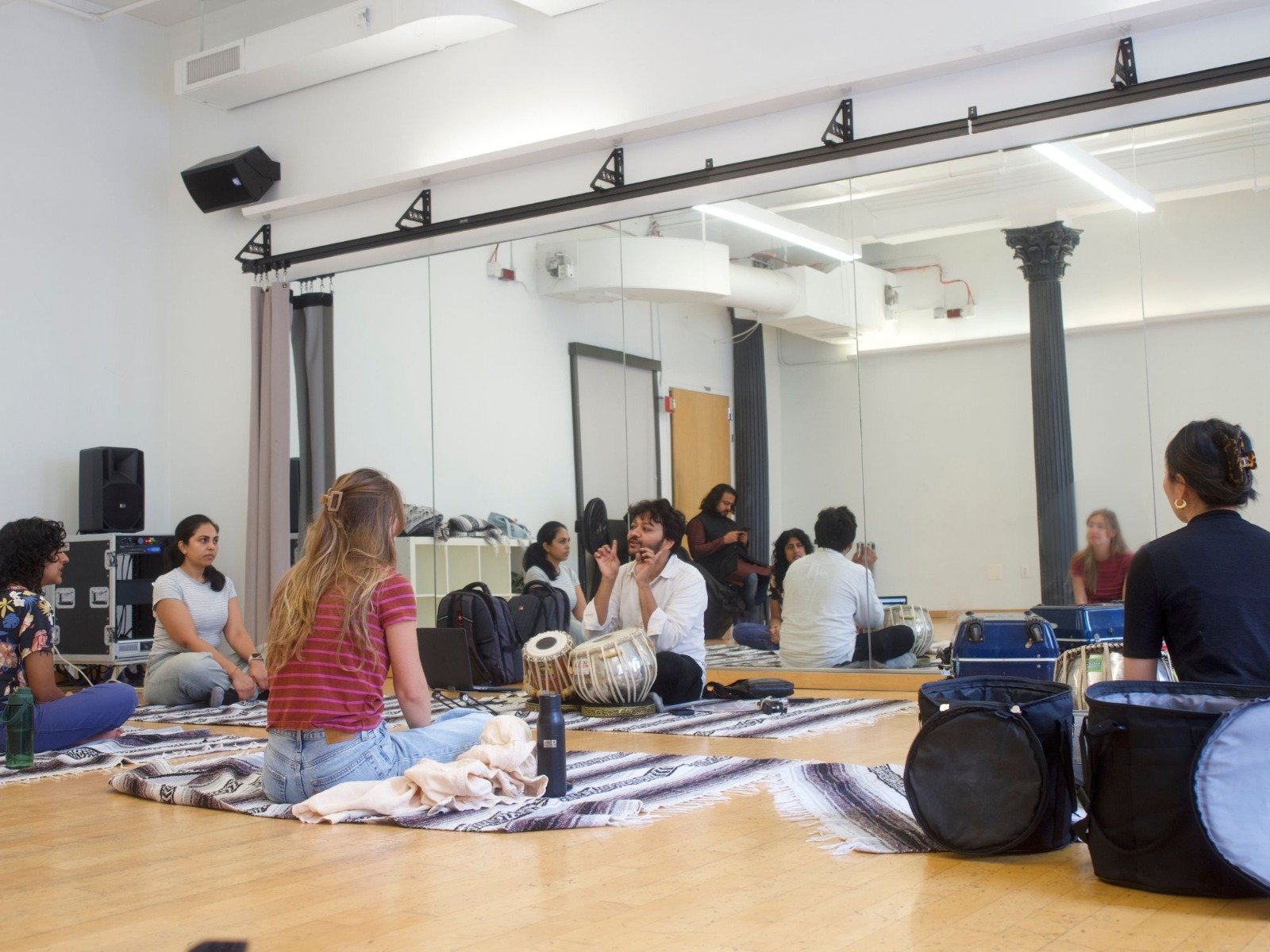
Music has long served as a universal language, transcending borders, cultures, and generations. In today’s interconnected world, global music education has become more than a pursuit of artistic excellence; it is a vital instrument for cultural understanding, personal development, and societal cohesion. By blending structured Western conservatory methodologies with the rich, nuanced traditions of Indian classical music, educators can cultivate musicians who are not only technically proficient but also deeply expressive and culturally aware. One cornerstone of this education is performance-based music training, which emphasizes practical experience alongside theoretical knowledge.
Structured Curriculum as the Foundation of Musical Growth
At the heart of effective music education lies a well-structured curriculum that guides students from foundational skills to advanced mastery. In Western conservatories, curricula are carefully sequenced, combining theory, technique, and ensemble participation. Students typically begin with fundamental musical literacy, developing skills in reading notation, understanding harmony, and internalizing rhythm. As their knowledge deepens, they engage in more complex studies of counterpoint, orchestration, and historical repertoire.
When integrating Indian classical traditions, educators can adapt the curriculum to include ragas, talas, and improvisational techniques, fostering both analytical and interpretive skills. Such a curriculum not only broadens the student’s musical vocabulary but also encourages a cross-cultural perspective, emphasizing that musical literacy extends beyond notation to include listening, sensitivity to tonal subtleties, and the capacity to respond to dynamic contexts in real time.
Technique as the Pathway to Mastery
Technical proficiency is essential for meaningful musical expression. In conservatory settings, technique is cultivated through rigorous practice regimens that focus on posture, dexterity, tone production, and articulation. Mastery of technical skills allows musicians to execute complex passages with precision while maintaining expressive nuance.
Indian classical music introduces a complementary technical framework, where microtonal precision, intricate ornamentation, and improvisational fluency are emphasized. Integrating these techniques with Western methods creates versatile musicians capable of approaching diverse repertoires with authenticity and confidence. Performance-based music training plays a critical role here, as it shifts the focus from repetitive drills to applied technical practice, ensuring that every technical exercise contributes directly to expressive capability.
Ensemble Participation and Collaborative Learning
No musician grows in isolation. Ensembles, whether orchestras, chamber groups, or Indian classical jugalbandis, provide essential opportunities for collaborative learning. Students learn to synchronize with others, respond to subtle cues, and contribute to a collective sound, all while developing leadership and communication skills.
Global music education encourages students to participate in both Western and Indian ensembles. In Western orchestras, musicians experience structured interplay within rigidly notated scores, whereas Indian ensembles emphasize real-time improvisation and intricate rhythmic cycles. This dual exposure fosters adaptability and deepens the student’s understanding of musical dialogue, enhancing their ability to navigate diverse performance contexts. Ensembles also reinforce the practical applications of performance-based music training, as students translate individual technical mastery into cohesive, expressive performances.
Performance as a Measure of Learning
Performance is the ultimate test of a musician’s skill, knowledge, and interpretive insight. In conservatories, regular recitals, juries, and public concerts are integrated into the curriculum to provide students with opportunities to showcase their growth. Performance challenges students to synthesize theory, technique, and ensemble experience while cultivating stage presence, emotional communication, and resilience under pressure.
Indian classical concerts, with their emphasis on improvisation and spontaneous interaction, add another dimension to performance education. Students learn to engage audiences in real time, adapting to mood, context, and fellow performers. By incorporating performance-based music training across both Western and Indian paradigms, educators enable students to experience music as a living, dynamic art form rather than a static academic exercise.
Progression and Lifelong Learning
Musical education is not merely a phase of life but a lifelong journey. Structured progression in conservatories ensures that students advance methodically, moving from foundational skills to complex repertoires, solo performance, and advanced ensemble leadership. This progression is marked by assessments, mentorship, and reflective practice, guiding students toward independence and professional readiness.
The incorporation of Indian classical traditions further reinforces the principle of lifelong learning. The guru-shishya approach, emphasizing mentorship and continual refinement, teaches that mastery is never complete; there is always room for deeper understanding and subtlety. Students trained under this dual system are well-equipped for professional careers, teaching, and continuous artistic growth, embodying the ideal of global musicianship.
Cultural Awareness and Societal Impact
Global music education does more than create skilled performers; it cultivates cultural literacy and empathy. Exposure to diverse musical traditions fosters respect for different artistic expressions, encourages cross-cultural collaboration, and challenges ethnocentric perspectives. Music becomes a medium for dialogue, bridging social divides and promoting inclusivity.
By integrating performance-based music training, educators ensure that this cultural awareness is paired with tangible skill. Students do not merely learn about musical diversity in theory—they actively engage with it through performance, collaboration, and improvisation. Such experiences foster critical thinking, adaptability, and emotional intelligence, qualities that extend far beyond the concert hall.
Preparing Musicians for a Global Stage
In an era of digital connectivity, musicians are increasingly called to perform, collaborate, and teach across cultural and geographical boundaries. Global music education equips students with the tools needed to thrive in this environment. They develop technical mastery, theoretical understanding, improvisational agility, and ensemble skills while cultivating sensitivity to cultural nuance. Performance-based music training ensures that this education is not confined to the classroom, but applied in authentic, high-pressure contexts that mirror professional realities.
Ultimately, the significance of global music education lies in its ability to nurture musicians who are technically proficient, culturally literate, and socially conscious. By blending Western conservatory rigor with the depth and improvisational richness of Indian classical music, educators can produce artists capable of leading, innovating, and inspiring in today’s diverse musical landscape.
Global music education, anchored in performance-based music training, is not just an academic pursuit—it is a transformative experience that equips individuals to contribute meaningfully to society, bridge cultural divides, and keep the timeless power of music vibrant in a rapidly changing world.