Exploring the Intersection of Corporate Offices, Nonprofits, and Coffee Culture on One Extraordinary Island
Manhattan is often reduced to its most visible archetype: the ruthless deal-maker closing billion-dollar acquisitions in a glass tower overlooking Central Park. While that image is not entirely fictional, it captures only a fraction of the island’s professional ecosystem. The reality is far richer, far more nuanced, and far more human than the stereotype suggests.
Beneath the towering corporate headquarters and the gleaming trading floors, Manhattan sustains a complex web of purpose-driven organizations, community-rooted nonprofits, and independently operated gathering spaces — chief among them, the humble coffee shop. These three categories of business may seem unrelated at first glance, but in Manhattan, they are deeply interconnected. They share neighborhoods, employees, customers, and a collective stake in the island’s future.
This article explores how Manhattan’s diverse business landscape creates a uniquely productive ecosystem where profit motives coexist with social missions, and where a cup of coffee can serve as the catalyst for both a venture capital pitch and a volunteer recruitment meeting.
The Corporate Office: Engine of Manhattan’s Economy
There is no sugarcoating the significance of corporate offices to Manhattan’s economy. The island hosts the headquarters of major financial institutions, global media companies, leading law firms, and an increasing number of technology firms that have chosen Manhattan over Silicon Valley for their primary operations. The Midtown corridor, stretching from Grand Central to Rockefeller Center, remains the densest concentration of corporate office space in the world.
But the nature of the corporate office is changing. The pandemic accelerated trends that had been building for years: flexible work arrangements, decentralization of teams, and a fundamental rethinking of what office space needs to accomplish. Companies that once required 50,000 square feet of traditional cubicle farms are now designing collaborative workspace ecosystems with fewer assigned desks, more meeting rooms, and amenities designed to make the commute worthwhile.
In Manhattan, this transformation has created a fascinating real estate dynamic. Class A office towers in prime locations continue to command premium rents, but the vacancy rate in older, less amenitized buildings has climbed. Landlords who invest in modernization — adding fitness centers, outdoor terraces, improved air filtration, and flexible lease terms — are winning tenants. Those who do not are watching their buildings empty out.
For entrepreneurs and business owners looking to understand the current landscape, a comprehensive listing of corporate offices across Manhattan provides invaluable intelligence. Knowing where competitors, partners, and clients are located — and what types of spaces they occupy — informs strategic decisions about everything from hiring to marketing.
The Tech Migration
One of the most significant developments in Manhattan’s corporate landscape over the past decade has been the influx of technology companies. Google, Amazon, Facebook (Meta), and Apple have all dramatically expanded their Manhattan footprints. This is not merely a satellite office phenomenon — these companies are building primary East Coast headquarters on the island, drawn by the talent pool, the cultural amenities, and the network effects of being physically present in the world’s most influential city.
The tech migration has reshaped entire sub-markets. Hudson Yards, the massive development on Manhattan’s Far West Side, attracted major tech tenants who wanted modern, purpose-built office space rather than retrofitted pre-war buildings. The Flatiron District and NoMad have become tech startup hubs, with coworking spaces, incubators, and venture capital offices concentrated within a few blocks of each other.
This corporate evolution does not exist in isolation. The people who work in these offices — hundreds of thousands of highly educated, high-earning professionals — are the same people who frequent local coffee shops, donate to local nonprofits, and shape the consumer market that determines which businesses survive and which do not.
Nonprofit Organizations: Manhattan’s Social Infrastructure

If corporate offices are Manhattan’s economic engine, nonprofit organizations are its conscience. The island hosts more nonprofit headquarters than any comparable geographic area in the world. From the United Nations complex on the East River to the hundreds of neighborhood-based organizations serving specific communities, the nonprofit sector is woven into every aspect of Manhattan life.
The range is staggering. International humanitarian organizations like UNICEF and Doctors Without Borders maintain their U.S. offices here. Major cultural institutions — the Metropolitan Museum of Art, the New York Public Library, the Lincoln Center for the Performing Arts — operate as nonprofits, relying on a combination of endowment income, government funding, and private donations. And at the neighborhood level, community-based organizations provide services that government agencies cannot or will not deliver: after-school programs, food pantries, immigrant legal services, domestic violence shelters, and workforce development training.
What makes Manhattan’s nonprofit sector particularly interesting is its proximity to the corporate world. The same Midtown office tower might house a hedge fund on the 40th floor and a human rights organization on the 12th. This physical proximity creates natural pathways for collaboration — corporate social responsibility programs, pro bono professional services, board memberships, and fundraising partnerships that benefit both parties.
For those seeking to connect with or support nonprofit organizations throughout Manhattan, the opportunities are as diverse as the organizations themselves. Whether your interest is arts education, environmental conservation, public health, or social justice, there is almost certainly a Manhattan-based nonprofit working on the issue — and most are actively seeking volunteers, donors, and professional expertise.
The Funding Challenge
Despite the concentration of wealth in Manhattan, nonprofit funding remains perpetually precarious. The competition for donor dollars is fierce. A single gala event in Manhattan might compete with dozens of other fundraising events happening the same evening. Government grants, while substantial, come with reporting requirements and restrictions that can consume significant staff time. And the rising cost of Manhattan real estate means that rent and facility expenses eat a growing percentage of operating budgets.
Smart nonprofits are responding to these challenges by diversifying revenue streams. Social enterprise models — where the organization operates a revenue-generating business alongside its charitable mission — are gaining traction. Partnerships with corporate offices, where companies provide not just funding but also in-kind professional services like legal counsel, marketing support, and technology infrastructure, are increasingly common and increasingly sophisticated.
The most effective nonprofits in Manhattan are those that treat their corporate neighbors as partners rather than ATMs. The relationship works best when it creates genuine value for both sides.
The Coffee Shop: Manhattan’s Third Place
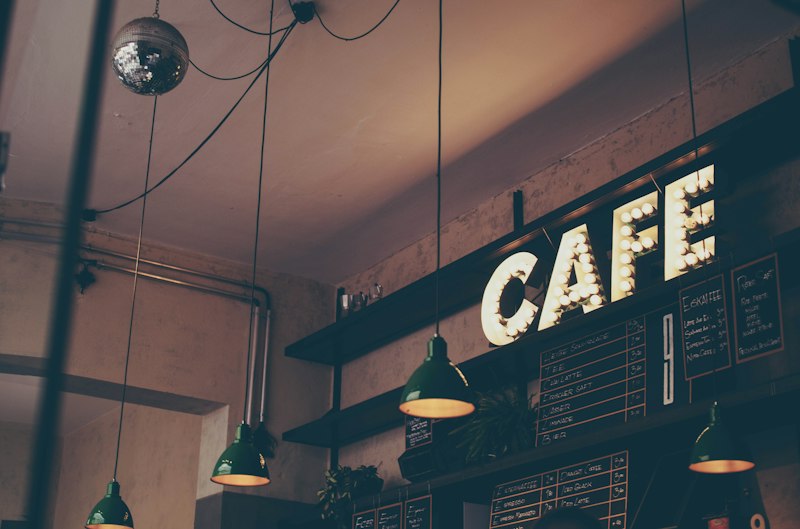
The sociologist Ray Oldenburg coined the term “third place” to describe the informal public gathering spaces that are essential for community life — distinct from the first place (home) and the second place (work). In Manhattan, no institution fills this role more completely than the independent coffee shop.
Manhattan’s coffee culture has undergone a dramatic evolution over the past two decades. The era when Starbucks was the only reliable option for a decent espresso is long gone. Today, the island supports hundreds of independently owned coffee shops, each with its own character, its own roasting philosophy, and its own community of regulars. From the third-wave specialty roasters in the West Village to the spacious neighborhood cafés of the Upper West Side, coffee shops have become the connective tissue of Manhattan’s social fabric.
But the coffee shop is far more than a place to caffeinate. It is, for many Manhattanites, a mobile office, a meeting room, a study hall, and a community bulletin board rolled into one. The freelancer working on a laptop at a corner table, the nonprofit director meeting with a potential donor over lattes, the corporate executive conducting an informal job interview — all of these scenarios play out daily in Manhattan coffee shops.
Finding the right coffee shops across Manhattan is not just about finding good coffee — though that matters enormously. It is about finding spaces that match your needs, your work style, and your social preferences. The best Manhattan coffee shops understand this and design their environments accordingly: comfortable seating for extended stays, reliable Wi-Fi, adequate power outlets, and a noise level that facilitates both concentration and conversation.
Coffee as Economic Catalyst
The economic impact of Manhattan’s coffee shops extends far beyond their own revenue. Studies consistently show that coffee shops increase property values in their immediate vicinity. A well-run café signals to potential residents and businesses that a neighborhood is active, safe, and worth investing in. Real estate developers have taken notice — many new residential and mixed-use developments in Manhattan now include dedicated café space as a standard amenity, recognizing that the presence of a quality coffee shop enhances the marketability of the entire project.
Coffee shops also serve as informal economic development engines. In neighborhoods like Harlem, Washington Heights, and the Lower East Side, independent coffee shops have been among the first signs of commercial revitalization. They attract foot traffic, create local jobs, and provide gathering spaces where community members can share information, build relationships, and organize collective action. The danger, of course, is gentrification — a tension that responsible coffee shop owners navigate by actively engaging with existing community members and organizations.
The Intersection: How These Three Worlds Connect
What makes Manhattan unique is not merely the presence of corporate offices, nonprofits, and coffee shops in the same geographic space — it is the density of interaction between them. Consider a typical day in Midtown:
- 8:15 AM — A corporate attorney grabs a cortado at an independent coffee shop on Lexington Avenue, exchanging pleasantries with the barista who knows her order by heart.
- 9:00 AM — She arrives at her office, a corporate law firm on the 35th floor of a Park Avenue tower, and begins reviewing a pro bono contract for a local nonprofit client.
- 12:30 PM — She walks to a nearby coffee shop to meet the executive director of a youth education nonprofit who needs legal advice on a real estate lease.
- 3:00 PM — Back at her desk, she approves a corporate volunteer program that will send 20 associates to help the nonprofit with a weekend tutoring event.
- 6:30 PM — She meets a colleague at a different coffee shop — this one with a wine and beer license — to debrief on the day and plan tomorrow’s meetings.
This sequence is not unusual. It is entirely normal in Manhattan, where the boundaries between work, community, and social life blur constantly. The corporate office provides the economic resources. The nonprofit provides the social mission. The coffee shop provides the neutral ground where the two can meet, plan, and build relationships. Together, they form an ecosystem that is greater than the sum of its parts.
Neighborhood Spotlights
Midtown East: The Corporate-Nonprofit Nexus
The area around the United Nations headquarters is perhaps the most concentrated example of corporate-nonprofit intersection in the world. International NGOs, diplomatic missions, and corporate offices share blocks, creating a professional ecosystem where a business lunch might involve discussing sustainable development goals alongside quarterly revenue projections. The coffee shops in this area tend to be cosmopolitan, multilingual, and oriented toward extended conversation rather than grab-and-go efficiency.
The Financial District: Money Meets Mission
Downtown Manhattan has traditionally been seen as purely commercial territory, but the growth of the nonprofit sector in the area has been remarkable. Organizations focused on financial literacy, economic development, and community reinvestment have established themselves alongside the very institutions whose practices they sometimes critique. The coffee shops here cater to a diverse crowd — bankers in bespoke suits sitting next to nonprofit organizers in jeans, both working on laptops, both essential to the neighborhood’s identity.
Upper West Side: Community-First Commerce
The Upper West Side offers perhaps the most integrated model of corporate, nonprofit, and coffee shop coexistence. The neighborhood’s residential character means that businesses here serve a local population with high expectations for community engagement. Corporate offices tend to be smaller and more specialized. Nonprofits are deeply embedded in neighborhood life. And coffee shops function as true community living rooms, hosting book clubs, political discussions, and neighborhood association meetings alongside the usual array of lattes and cappuccinos.
Looking Forward: The Evolving Ecosystem
Manhattan’s business ecosystem is not static. The relationship between corporate offices, nonprofits, and coffee shops is evolving in response to technological change, demographic shifts, and cultural transformation. The rise of remote work has blurred the boundaries between these categories even further — a nonprofit director might work from a coffee shop three days a week, meeting with corporate partners via video call while sitting at a communal table.
The organizations that will thrive in this evolving landscape are those that understand the interconnected nature of Manhattan’s professional world. Corporate offices that invest in their communities attract better talent and build stronger brands. Nonprofits that build genuine relationships with corporate neighbors secure more sustainable funding. Coffee shops that understand their role as community infrastructure — not just retail outlets — create the kind of customer loyalty that sustains businesses through economic downturns.
For anyone navigating this landscape — whether as a business owner, a nonprofit professional, or simply someone who wants to understand how Manhattan actually works — having access to a comprehensive view of the island’s business ecosystem is essential. The directories of corporate offices, nonprofit organizations, and coffee shops provide starting points for exploration, connection, and discovery.
Manhattan teaches us that the boundaries between profit and purpose, between work and community, between commerce and culture, are far more permeable than we typically assume. The island’s greatest strength is its ability to hold all of these forces in productive tension, creating an ecosystem where each element strengthens the others.
The next time you walk through Manhattan, pay attention to the interconnections. Notice the corporate executive ducking into a coffee shop to meet a nonprofit board member. Notice the freelancer using a café table to build a business that will eventually need corporate office space. Notice the nonprofit volunteer picking up coffee for the entire team before a Saturday morning service project. These are not separate worlds. They are different expressions of the same island’s extraordinary energy — and understanding how they fit together is the key to understanding Manhattan itself.